Why Cleansing Is the Most Underrated Step for Barrier Repair
When people talk about skin barrier repair, the conversation almost always centres on what you apply — ceramides, peptides, hyaluronic acid. Rarely on what you remove, and how. This is a significant blind spot. The cleanser is the first thing that touches your skin in a routine and the ingredient that has the most consistent daily contact with the barrier. A poorly formulated cleanser can undo every repair benefit from the products that follow it.
The mechanism of damage is straightforward. Most conventional cleansers rely on sodium lauryl sulfate (SLS) or similar anionic surfactants to generate lather and remove oil. SLS is highly effective at lipid removal — which is precisely the problem. The lipid it removes is not only sebum; it also strips the intercellular lamellar lipids (ceramides, cholesterol, free fatty acids) that form the physical barrier between corneocytes. A 2004 study published in the British Journal of Dermatology found that repeated SLS exposure increased TEWL by over 50% and disrupted barrier repair by damaging the lipid matrix.
The secondary mechanism is pH disruption. The skin's acid mantle sits at pH 4.5–5.5. Most alkaline cleansers (bar soaps especially, pH 9–11) dramatically shift this. Barrier enzymes — specifically serine proteases and lipases — that process ceramide precursors and support normal desquamation operate optimally at acidic pH. An alkaline cleanser disrupts their function and slows barrier regeneration even when no physical lipid stripping has occurred.
Vanicream's Gentle Facial Cleanser is formulated around these two problems. It is designed primarily as a negative-space product: what it does not contain is the central clinical argument for recommending it.
The Case Against SLS and Conventional Surfactants
Sodium lauryl sulfate (SLS) is the most studied surfactant irritant in dermatology. It is used as the positive control in patch testing protocols specifically because it reliably produces irritant contact dermatitis. Despite this, it remains present in the majority of facial cleansers, shampoos, and body washes on the market because it is cheap, generates satisfying lather, and consumers associate foam volume with cleansing efficacy.
The problem is that foam volume has no correlation with cleaning power. It is a cosmetic feature. Mild surfactant systems — amphoteric and non-ionic surfactants like cocoamidopropyl betaine, decyl glucoside, and coco-glucoside — clean as effectively as SLS-based formulas for everyday soil loads without the barrier-disrupting consequences.
Vanicream uses a mild surfactant system in the appropriate pairing: an amphoteric surfactant (cocoamidopropyl betaine) combined with a gentle non-ionic secondary surfactant. This combination provides adequate emulsification for light to moderate soil without exceeding the surfactant exposure threshold that damages lamellar bodies.
Ingredient Analysis
| Ingredient | Category | Function | Assessment |
|---|---|---|---|
| Cocoamidopropyl Betaine | Primary Surfactant | Amphoteric surfactant derived from coconut oil. Mild, pH-flexible, and significantly less irritating than SLS. Forms the primary cleansing base. | Key Active |
| PEG-80 Sorbitan Laurate | Secondary Surfactant | Non-ionic surfactant that provides mild emulsification for light oils and sunscreen without disrupting the acid mantle. | Supporting |
| Disodium Lauroamphodiacetate | Co-surfactant | Mild amphoteric co-surfactant that reduces irritation potential of the surfactant blend. Common in sensitive-skin formulations. | Supporting |
| Glycerin | Humectant | Standard humectant included at low concentration to partially offset moisture loss during the cleansing process. | Supporting |
| Citric Acid | pH Adjuster | Used to acidify the formula to approximately pH 5.5–6. This is the most important functional ingredient in the formula after the surfactants. | Key Active |
| Sodium Citrate | pH Buffer | Maintains pH stability throughout shelf life, ensuring the formula stays acidic even as preservative systems degrade. | Supporting |
| Caprylyl Glycol, Phenoxyethanol | Preservative System | Non-formaldehyde, low-sensitisation preservative pairing appropriate for reactive skin. Phenoxyethanol is well-tolerated at concentrations under 1%. | Supporting |
The Absence List — Why It Matters
Vanicream's entire brand identity is built around what is not in their formulations. The company was originally developed for patients with chemical sensitivities and is used in controlled dermatological settings precisely because of its exclusion profile. The Gentle Facial Cleanser is free of:
- Fragrance and fragrance masking agents (including linalool, limonene, geraniol)
- Sodium lauryl sulfate and sodium laureth sulfate
- Dyes and artificial colourants
- Parabens
- Formaldehyde-releasing preservatives (DMDM hydantoin, imidazolidinyl urea, quaternium-15)
- Lanolin
- Propylene glycol
- Cocamide DEA
This is a longer and more relevant list than most formulations' active ingredient panels. For eczema-prone, rosacea, or contact-dermatitis skin, every item on that list is a documented trigger. The absence of all of them simultaneously is not a marketing claim — it is a clinically meaningful reduction in daily sensitiser exposure.
pH: The Most Overlooked Formulation Factor in Cleansers
Consumer cleanser marketing essentially never mentions pH. This is a significant problem, because pH is arguably the most important variable in cleanser compatibility with barrier health.
At pH 4.5–5.5, the acid mantle supports optimal activity of serine proteases (enzymes responsible for controlled desquamation) and inhibits colonisation by Staphylococcus aureus, which requires neutral to slightly alkaline pH to adhere to the skin surface. This is clinically relevant for atopic dermatitis, where staph colonisation is a primary driver of inflammatory flares.
Vanicream's pH of approximately 5.5–6 is close enough to the acid mantle to minimise disruption on rinsing, without falling into the range where it would actively acidify the skin (which can also be destabilising if done too aggressively). This is the appropriate target for a leave-off cleanser.
Cleansing Efficacy — What It Can and Cannot Remove
The mild surfactant system in this formula is appropriate for daily facial cleansing of light-to-moderate soil: sweat, environmental pollution, excess sebum, and water-based skincare products. It handles most morning cleansing requirements and PM cleansing when no heavy SPF or long-wear makeup is present.
For removal of mineral SPF with high zinc oxide content, physical sunscreens, waterproof cosmetics, or oil-heavy products, a separate first cleanse with an oil-based or micellar cleanser is recommended. The mild surfactant system in Vanicream is not formulated to emulsify heavy cosmetic films, and repeated mechanical effort to force it to do so negates the gentleness benefit.
This is the correct functional scope for a sensitive-skin cleanser. It is not a limitation — it is intentional formulation logic.
Who Should Use This Cleanser
Best For
- Eczema-prone and atopic skin as a daily cleanser
- Rosacea skin sensitive to fragrance or surfactant irritation
- Post-procedure cleansing (laser, chemical peel, microneedling recovery)
- Contact dermatitis — especially fragrance contact allergy
- Paediatric sensitive skin and infant-safe alternatives
- Anyone building a minimal, irritant-free routine from scratch
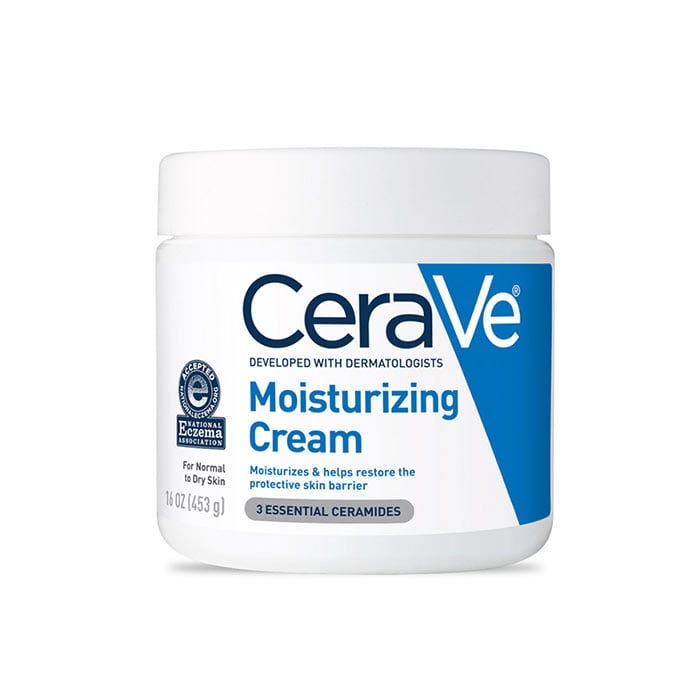
- Morning cleanse after CeraVe or occlusive nighttime products
Less Ideal For
- Heavy SPF or long-wear makeup removal — use a micellar or oil first
- Skin wanting visible lather or foam volume
- Oily skin needing deep pore cleansing after heavy exercise
Pros and Cons
Strengths
- pH approximately 5.5–6, acid mantle compatible
- SLS-free surfactant system
- Fragrance-free — verified, not just "unscented"
- No formaldehyde-releasing preservatives
- Dye and colourant free
- Dermatologist-recommended for atopic dermatitis
- Clinically tested for sensitive skin (National Eczema Association seal)
- $12 for 8oz — accessible price point
- Pump format available — hygienic and practical
Limitations
- Minimal lather — may feel insufficient to some users
- Does not remove waterproof or heavy-coverage products well
- No active hydrating or barrier-supporting ingredients
- Not a double-cleanser replacement — still requires a first cleanse for SPF days
Vanicream Gentle Facial Cleanser
The safest daily cleanser for reactive, eczema-prone, and barrier-compromised skin.
Our Verdict
Vanicream Gentle Facial Cleanser earns a 9.0/10. The score reflects a cleanser that does its job with remarkable precision and restraint — which is exactly what the category demands. Points withheld are for minor limitations in heavy-product removal and the absence of any active barrier-supporting ingredients, which are outside the scope of a rinse-off cleanser anyway.
The formulation demonstrates what a properly engineered sensitive-skin cleanser looks like: pH-adjusted to acid mantle compatibility, surfactant system chosen for gentleness over lather aesthetics, and free of every major documented sensitiser in clinical contact dermatology. There is nothing unnecessary in this formula and nothing missing from what a daily cleanser needs to do.
If you are starting a barrier repair routine and cannot afford to optimise every step, start with the cleanser. Everything applied after a barrier-compatible cleanse is more effective than the same products applied after a disrupting one. Vanicream costs $12 and removes one of the most common daily sources of ongoing barrier damage from your routine. It is the most cost-effective single change most people can make.
Frequently Asked Questions
Is Vanicream Gentle Cleanser good for a damaged skin barrier?
Yes. It uses a mild amphoteric surfactant instead of SLS or SLES, is formulated to a barrier-compatible pH, and contains no fragrance, dye, parabens, or known contact sensitizers. It does not disrupt the acid mantle or strip surface lipids during a normal daily cleanse — making it one of the best first-step choices for a minimalist barrier repair routine.
Does Vanicream Gentle Cleanser lather well?
It produces a low, creamy lather — significantly less foam than SLS-containing cleansers. This is intentional: high foam is a cosmetic property, not functional one. The lower-foaming surfactant system is gentler on barrier lipids. For heavy makeup or SPF removal, add a micellar water step before cleansing rather than switching to a higher-foam formula.
Can I use Vanicream Gentle Cleanser on my body?
Yes. Its minimal, fragrance-free formulation makes it suitable for the whole body — particularly for eczema-prone, allergy-tested, or contact dermatitis patients. It is commonly recommended by allergists for patch-test patients as a benchmark cleanser with no known sensitizers.
Is Vanicream Gentle Cleanser or CeraVe Hydrating Cleanser better for barrier repair?
Both are well-formulated for barrier-compromised skin. Vanicream has the simpler ingredient list and is preferred for allergy-prone patients. CeraVe Hydrating Cleanser includes ceramides and hyaluronic acid — added benefit in a rinse-off format, though the contact time is too short for significant ceramide absorption. For the most sensitive skin, Vanicream is the safer starting point.
Does Vanicream Gentle Cleanser remove sunscreen effectively?
It removes light mineral sunscreens effectively. For heavier chemical or water-resistant SPF formulations, a dedicated oil-based first cleanser or micellar water is recommended before Vanicream. Double cleansing — oil cleanser first, then Vanicream — ensures complete SPF removal without disrupting the barrier.
Related Reviews
Complete your barrier routine with these reviewed products: