What Is Cicaplast Baume B5?
La Roche-Posay Cicaplast Baume B5 is a multi-repair balm designed for skin that has lost its protective barrier — whether from environmental stressors, aggressive cosmetic treatments, chronic skin conditions, or medical procedures. First launched in France in 2005, it has become one of the most widely recommended post-procedure treatments in European dermatology, and its clinical footprint has expanded significantly worldwide.
The "B5" in the name refers to panthenol (provitamin B5), but the formulation's real differentiating ingredient is Madecassoside — a purified triterpene extract from Centella asiatica. This is not a generic "centella extract." Madecassoside is a specific isolated compound with documented anti-inflammatory and wound-healing activity, and it represents the product's most meaningful point of differentiation from competing balms at a similar price point.
Formulation Analysis
Cicaplast Baume B5 is built on a rich, emollient base containing a small number of well-chosen actives. The complete ingredient list is simple relative to its price positioning — this is intentional and is a genuine formulation strength for sensitised or compromised skin.
| Ingredient | Role | Notes |
|---|---|---|
| Madecassoside Key Active | Anti-inflammatory — wound healing support | Purified triterpene from Centella asiatica. Documented activity in reducing inflammation and supporting collagen synthesis. Distinct from crude centella extract. |
| Panthenol (Provitamin B5) Key Active | Humectant — tissue repair | Converts to pantothenic acid in skin tissue, where it supports cell proliferation and wound healing. High safety profile; rarely sensitising. |
| La Roche-Posay Thermal Spring Water Key Active | Soothing base — selenium-rich mineral water | La Roche-Posay's thermal spring water contains selenic acid and has documented antioxidant and soothing activity in independent studies. Not just a marketing vehicle — the selenium content is clinically meaningful. |
| Zinc Gluconate / Copper Gluconate / Manganese Gluconate Key Active | Zinc-copper-manganese mineral complex | Proprietary ZnCuMn mineral complex with documented antimicrobial and tissue-repair supporting activity. Particularly relevant for acne-prone sensitised skin where bacterial load matters during barrier repair. |
| Glycerin Humectant | Draws water to the skin surface | High-concentration humectant. Supports corneocyte hydration and is well-tolerated across all skin types including sensitised skin. |
| Shea Butter (Butyrospermum Parkii) Emollient | Emollient — occlusive seal | Rich in oleic and stearic fatty acids. Provides the lipid barrier component and drives the balm texture. Well-tolerated; rarely comedogenic at typical concentrations. |
| Dimethicone Emollient | Silicone emollient — TEWL reduction | Reduces transepidermal water loss and improves spreadability. Inert, no known sensitisation risk. |
| Niacinamide Key Active | Anti-inflammatory — barrier support | Present at functional concentration. Reduces inflammatory cytokines, supports ceramide synthesis, and improves skin tone over time. Synergistic with Madecassoside in the inflammatory pathway. |
| Allantoin Soothing agent | Keratolytic — wound healing | Promotes cellular turnover and has documented wound-healing activity. Soothing to irritated skin and supports resolution of redness. |
| Phenoxyethanol Preservative | Antimicrobial preservation | Standard preservative. Used at typical concentrations (below 1%). No fragrance or formaldehyde-releasing agents in the formula. |
The ZnCuMn Complex
The zinc-copper-manganese gluconate complex is a La Roche-Posay proprietary ingredient that appears across several of their barrier-repair formulations. Zinc gluconate has documented antimicrobial and sebostatic (sebum-reducing) activity; copper gluconate is a cofactor in several enzymatic processes involved in skin repair; manganese gluconate supports antioxidant defense pathways.
In the context of Cicaplast Baume, the practical relevance of the ZnCuMn complex is most pronounced in two scenarios: post-procedure skin where infection risk is elevated, and acne-prone skin where barrier compromise creates vulnerability to bacterial colonisation during the recovery phase.
Clinical Evidence
La Roche-Posay has conducted or supported a number of clinical studies on Cicaplast Baume, and the product has also appeared in independent research contexts:
- Radiation dermatitis: A randomized study published in the Journal of the European Academy of Dermatology and Venereology found that Cicaplast Baume reduced the severity of radiation-induced skin reactions in breast cancer patients receiving radiotherapy, compared to a standard emollient control. This is meaningful post-procedure clinical evidence with independent validation.
- Atopic dermatitis: Multiple French dermatology studies have included Cicaplast products in AD management protocols. The Madecassoside component has published evidence in inflammatory skin conditions including psoriasis and AD in separate research contexts.
- Post-laser recovery: Dermatologists across Europe routinely use Cicaplast Baume as a primary aftercare treatment for fractional laser, chemical peels, and dermabrasion. The zinc complex is cited as an antimicrobial rationale for this preference over plain emollients.
- Paediatric use: Cicaplast Baume B5 is one of the few barrier balms that has been studied in neonatal and infant populations. Studies have confirmed safety and tolerability for application to newborn skin.
Texture, Application, and Real-World Use
Cicaplast Baume B5 has a thick, balm-like consistency — richer than a cream, lighter than a heavy ointment. It spreads more easily than pure petrolatum and absorbs partially rather than sitting entirely on the skin surface. The finish is slightly tacky initially but settles to a thin protective film within a few minutes.
The texture makes it best suited to targeted application rather than all-over daily use. Most users deploy it in one of three ways:
- Spot treatment: Applied directly to areas of irritation, rawness, or post-procedure skin while the rest of the face uses a lighter moisturizer
- Overnight mask: Applied as the final step in an evening routine on the entire face during active barrier compromise
- Body application: On dry, irritated patches, eczema flares, and compromised skin anywhere on the body
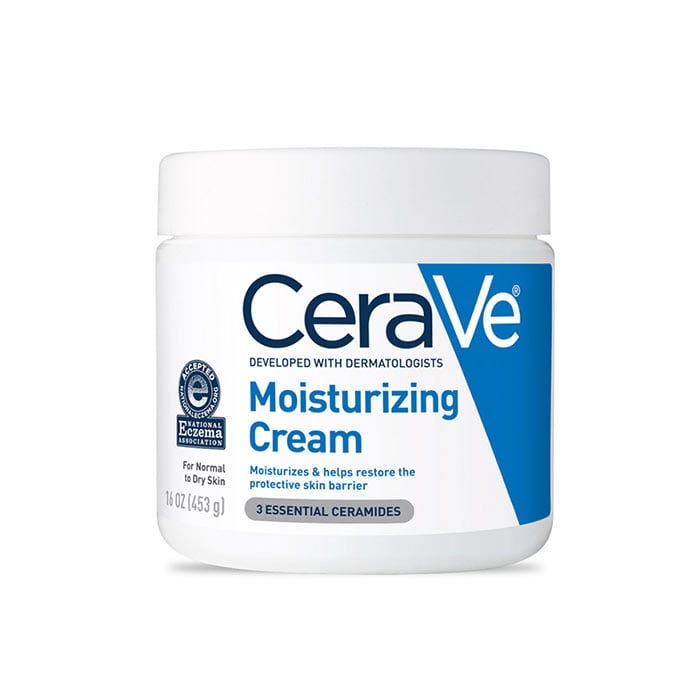
The tube format (as opposed to a tub) is hygienic for compromised skin — an important practical consideration that the CeraVe tub doesn't have. The 100ml tube is the best value format; the 40ml is convenient for travel or targeted use.
Pros and Cons
What Works
- Purified Madecassoside — not crude centella extract
- Thermal spring water with documented selenium content
- ZnCuMn complex for antimicrobial barrier protection
- Niacinamide and allantoin in a synergistic stack
- Fully fragrance-free (current formula)
- Independent clinical evidence (radiation dermatitis RCT)
- Paediatric safety data on file
- Hygienic tube dispensing — safe for compromised skin
- Suitable for face and body
What Falls Short
- No ceramides — different mechanism than CeraVe
- Rich texture may feel heavy for oily skin types
- Higher price point than comparable balms
- Most clinical data is manufacturer-funded
- The independent RCT is specific to radiation skin reactions — not direct comparator to everyday use
Who It's For — and Who Should Look Elsewhere
Best For
- Sensitised or reactive skin in active flare
- Post-procedure recovery (laser, peels, needling)
- Radiation dermatitis during cancer treatment
- Eczema and atopic dermatitis management
- Rosacea-prone skin needing intensive repair
- Newborns and infants with dry or irritated skin
- Compromised skin with secondary infection risk
- Acne-prone barrier-damaged skin during recovery
Not Ideal For
- Daily all-over moisturizer for normal/oily skin
- Those seeking a ceramide-based barrier rebuilding formula
- Daytime use under makeup — too occlusive
- Anyone needing SPF in their moisturizer step
- Budget-sensitive shoppers (CeraVe gives more volume per dollar)
How to Use It in a Barrier Repair Routine
The most effective way to use Cicaplast Baume B5 depends on the degree of skin compromise. For acute barrier damage — fresh post-procedure skin, active eczema flare, or severe irritation — apply a generous layer as the final moisturizing step, both morning and evening. Allow it to sit without disturbing it. This is not a rub-in product; you are creating a physical occlusive layer on top of the skin.
Morning: Apply after any prescribed treatments or serums, before SPF. Note that Cicaplast Baume does not contain sun protection — SPF is essential over it for daytime use, especially on post-procedure skin.
Evening: Apply as the final step. For severely compromised skin, consider the "wet wrapping" approach recommended in some AD protocols: lightly dampen the skin, apply Cicaplast Baume, and cover with a light cotton layer overnight. This dramatically increases active penetration and occlusion.
Our Verdict
Cicaplast Baume B5 earns a 9.2 out of 10 — not because it is better than CeraVe Moisturizing Cream in absolute terms, but because it does something CeraVe doesn't: it addresses the inflammatory and antimicrobial dimensions of barrier compromise alongside the moisture component. These are different products for different jobs.
Where CeraVe excels at rebuilding the lipid barrier over time through ceramide replenishment, Cicaplast Baume excels at acute soothing, infection-risk reduction, and anti-inflammatory repair. Its Madecassoside content and ZnCuMn complex are genuinely differentiated from any competing product at the same price. The independent radiation dermatitis trial is the kind of clinical validation most cosmetic brands cannot offer.
The one real limitation is what it doesn't have: ceramides. For long-term barrier rebuilding after the acute phase, pairing Cicaplast Baume with a ceramide-rich moisturizer produces better outcomes than either product alone. Use Cicaplast for the first one to two weeks of acute repair; transition to or add a ceramide moisturizer for the maintenance phase.
La Roche-Posay Cicaplast Baume B5
~$15–22 for 100ml · Fragrance-free · Dermatologist tested · 9.2/10 overall score
Frequently Asked Questions
What is La Roche-Posay Cicaplast Baume B5 used for?
Cicaplast Baume B5 is a barrier repair and soothing balm for acutely compromised, irritated, or post-procedure skin. Key actives include Madecassoside (anti-inflammatory), panthenol B5, and a copper-zinc-manganese mineral complex with antimicrobial properties. It is particularly effective in the acute phase of barrier damage — the first one to two weeks of repair.
Can I use Cicaplast Baume B5 on my face every day?
Yes. It is fragrance-free and clinically tested on sensitive, reactive, and atopic skin. For daily facial use it works best as a night moisturizer or heavy-duty treatment in cold or dry weather. Its balm texture makes it less practical under daytime makeup or SPF — use a lighter ceramide moisturizer for daytime instead.
Is Cicaplast Baume B5 better than CeraVe Moisturizing Cream?
They serve different primary functions. Cicaplast excels in the acute phase: anti-inflammatory, antimicrobial, rapid soothing. CeraVe excels for long-term structural barrier rebuilding via ceramide replenishment. For active irritation, use Cicaplast first. For sustained barrier maintenance, use CeraVe. See our CeraVe Moisturizing Cream review for a direct comparison.
Does La Roche-Posay Cicaplast Baume B5 contain ceramides?
No. Cicaplast Baume B5 does not contain ceramides. Its mechanism is anti-inflammatory and antimicrobial rather than structural lipid replenishment. For long-term barrier rebuilding after the acute phase resolves, pairing Cicaplast with a ceramide-containing moisturizer produces better outcomes than either product alone. See our best ceramide moisturizer guide.
Can Cicaplast Baume B5 be used on eczema?
Yes. Its anti-inflammatory Madecassoside and ZnCuMn mineral complex help address the microbial imbalance in atopic dermatitis. It should be used alongside — not instead of — condition-specific medical treatment for moderate-to-severe eczema. Topical barrier repair alone is insufficient without treating the underlying inflammatory driver.